

Blog
BLOG DISCLAIMER
 This blog provides general information and discussions about NVR and related subjects. The information and other content provided in this blog, or in any linked materials, are not intended and should not be construed as professional advice, nor is the information a substitute for professional expertise or treatment. If you or any other person has a concern, you should consult with a professional NVR advisor. Never disregard professional advice or delay in seeking it because of something that you have read on this blog or in any linked materials.
The opinions and views expressed on this blog are those of the blog post author and have no relation to those of any academic, health practice or other institution, including those of PartnershipProjects UK Ltd.
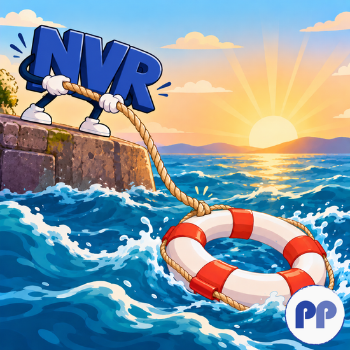
Holes in the Doors and Broken Walls: My Journey with NVR
My journey with Non-Violent Resistance (NVR) began during my final-year placement as a student social worker. At the time, my Practice Educator was an Advanced NVR Practitioner, and through our reflective conversations, I was introduced to the core strategies and philosophy of NVR—a concept entirely new to me, but one that instantly resonated on a deep level.
As someone who had lived through domestic violence and later experienced child-to-parent violence in my own home, our discussions often explored the emotional impact of witnessing domestic abuse, how trauma manifests in children’s behaviour, and my own feelings of helplessness as a parent. For years, I had searched for a way to understand and respond to the chaos around me. NVR felt like the missing piece I had been waiting for.

More Than Enforcers
Using NVR to raise the presence of teachers and front-line support workers
“You don’t know what it’s like. You don’t realise how bad he gets!”
With tears in her eyes, Gina was describing the incident of the previous night to me. Gina was about 36 hours into her 96-hour shift at a semi-independent accommodation (SIA) where she works 1:1 (4 days on; 3 days off) supporting Oscar, a 16-year-old boy who left the family home after years of physical abuse, witnessing domestic violence and being heavily exploited by local drug dealers. Gina had caught Oscar smoking cannabis in his bedroom with a friend. She reminded him that he was not allowed to smoke in the placement, and said that the friend would have to leave anyway, as it was after 10pm. What followed was 2 and a half hours of increasing aggression and intimidation.
The Bottom of the ‘to-do list!’
Nurturing Yourself With Compassion, Courage, and Connection
In our fast-paced world, the concept of self-care has become increasingly popular. Perhaps, for many, a ‘buzz’ word to banter about, yet not put into practice. Hence, really placing ourselves at the bottom of our own ‘to-do ‘lists! Often with the mantra ‘I don’t have time, I need to do…’. Self-care should go beyond scented candles and bubble baths. It is about fostering a deeper relationship with oneself, rooted in respect, resilience, and compassion. Essentially mirroring the principles of Non-Violent Resistance (NVR), originally developed as a method for social and familial change, but equally applicable to our personal journeys. By applying the principles of NVR to self-care, we can cultivate a life that is both gentle and resolute.
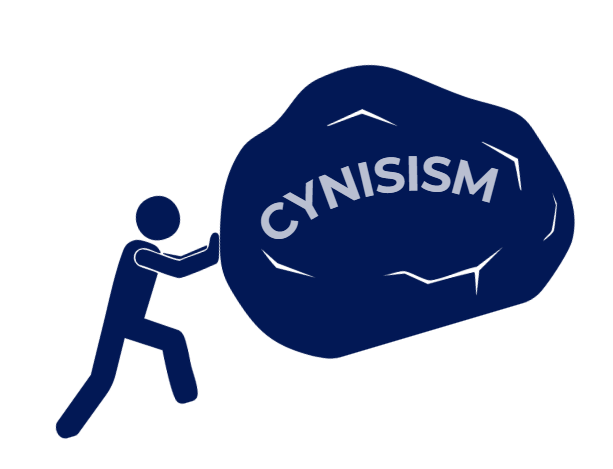
NVR: From Cynicism to Wonder
NVR – “Sounds good- but not for my high-risk cases”
I came across NVR when an ex-colleague started praising the power of NVR to such an extent that I was doubtful. I was a Safeguarding Social Worker, and I remember thinking, cynically in my head, that NVR sounded wonderful for her but that it would never work with my high-risk cases. How wrong I was!
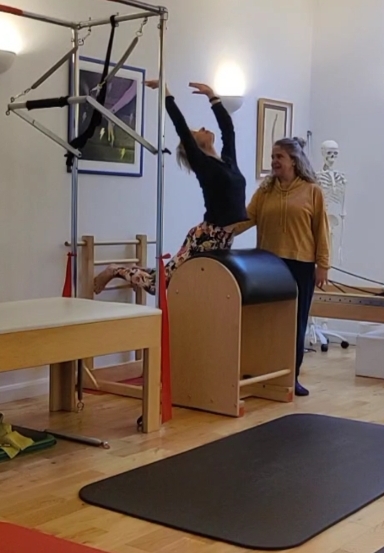
Moving in Three Dimensions: What Pilates taught me about NVR and what NVR taught me about Pilates
Last year, to my relief, I qualified as a comprehensive Pilates instructor. It was an intense and very personal journey, starting from a place of curiosity and from a love of Pilates that I have carried since my twenties.
During my training, I was asked to write a values and mission statement. What came out surprised me. Before exam fear took over and my world shrank to anatomy, spring settings, and contraindications, I had already started to find language that wove together my two worlds; Pilates and Non-Violent Resistance. Reading it back recently, I realised the integration had been happening long before I was ready to name it.
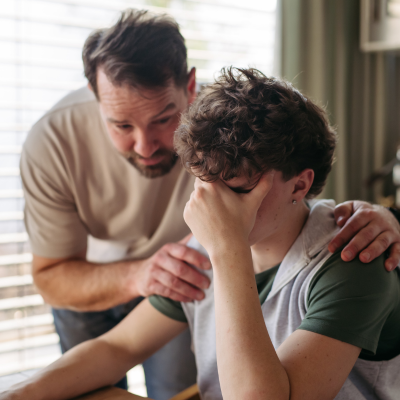
NVR as a Response to Extra-Familial Harm (EFH)
The following offers some thoughts on how NVR can be utilised in response to harm that happens outside of the home.
Adolescence, for many, is a stage of thrilling opportunity and exciting possibility. It’s a chance for growing independence and asserting autonomy. To spend time with friends, hang out in new places, experiment with risks and develop an identity separate from parents/carers. For some, this exploration is taking place in contexts and relationships that are both attractive and enticing, whilst simultaneously dangerous and threatening. This pattern characterises many of the relationships of young people facing risk and harm outside of their homes and can pull young people away from safe adults who care deeply about them.

Balancing Risk and Relationships: NVR in Contextual Safeguarding Practice
I chose this topic because it reflects the reality of my day-to-day practice and one of the most formative journeys of my professional life. Working as a Practitioner using the Non-Violent Resistance approach has repeatedly placed me alongside families living with fear, exhaustion, and profound uncertainty, they endure whilst navigating violence in the home and simultaneously facing serious risks that sit far beyond it.

Attending to Parental Presence in Inpatient CAMHS
Inpatient CAMHS admissions occur at times of significant emotional crisis for children and families. While admissions can be necessary, there is increasing emphasis on shorter stays closer to home (Northover, 2021). This gets no argument from me. As a clinician...
My NVR journey: Cultivating Courage in an NHS Community CAMHS Service
I qualified as a Mental Health Nurse in 1997, initially working in an acute adult mental health ward, then in a crisis team until the opportunity came to move into CAMHS on a development post. This is where my passion for working with families and parents began, which eventually led to completing my family therapy training. I am now a full-time family therapist in CAMHS.

NVR: Finding an Anchor, a Map, and a Compass in Inpatient CAMHS
Introducing Non-Violent Resistance (NVR)
In March 2022, Rachel Horn and I began training in Non-Violent Resistance (NVR).
NVR has been shown to reduce aggression and improve dynamics within residential and inpatient settings (van Gink et al., 2020; Embeita & Birch, 2025).
Inspired by its use within our then consultant, Dr Claire Purcell’s previous context, we sought to integrate NVR into the ward, family therapy and parent group interventions.