Last year, to my relief, I qualified as a comprehensive Pilates instructor. It was an intense and very personal journey, starting from a place of curiosity and from a love of Pilates that I have carried since my twenties.
During my training, I was asked to write a values and mission statement. What came out surprised me. Before exam fear took over and my world shrank to anatomy, spring settings, and contraindications, I had already started to find language that wove together my two worlds; Pilates and Non-Violent Resistance. Reading it back recently, I realised the integration had been happening long before I was ready to name it.
This is my attempt to name it now.
 Beginning with Breath
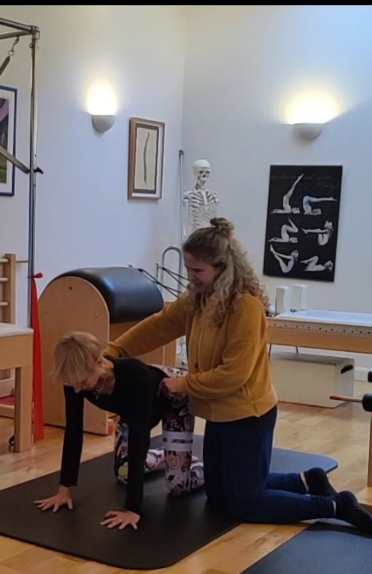
Every Pilates session I lead begins the same way, with breathing and release. Before we move, we reoccupy. We notice where the tension is sitting, where we are guarding, where movement has become effortful and contracted. We let go. We allow breath and movement to become more efficient, less forced.
This is strikingly similar to what we ask of parents in NVR — the movement from a state of erasure back to a place of presence.
In NVR, when working on de-escalation, I have often asked parents where they feel things in their body. Are there echoes of past feelings in the way they find themselves reacting to their child? Do they have the urge to retaliate, to justify, to join in? We focus a great deal on the idea of letting go. Of giving oneself permission not to join in.
In both practices, the starting point is the same: arrive, breathe, notice, release. Only then can you move well.
The Stories We Tell About What We Can’t Do
In Pilates, our beliefs about what our bodies can or cannot do show up in the way we guard our movements. These beliefs shape our self-image, constrain our range, and hold us back from discovering the strength we didn’t know we had. To change these patterns, we often have to understand where they came from.
In NVR, our beliefs about what we should or shouldn’t be able to make others do have the same effect. They leave us trying to control things that will never be within our control and prevent us from trying new ways of responding. In both practices, change begins not with effort but with awareness, noticing the pattern before we can shift it.
We can only change the way we respond to others, and this takes practice. By repeating and strengthening certain patterns, we can let go of the ones that are no longer serving us.
We achieve this by helping people find exceptions in their self-narratives, a seed from which change can grow. Joe Pilates put it well: ‘… developing minor muscles naturally helps to strengthen major muscles… when all of your muscles are properly developed, you will perform your work with minimum effort and maximum pleasure.’ This resonates deeply with the NVR principle of practising small changes in our responses. Changes that, over time, become embodied, until we no longer must think about them.
This is the journey from unconscious incompetence to conscious incompetence, to conscious competence, and finally back to unconscious competence, as new patterns become natural and old ones quietly fall away.
The Language of Images
In Pilates, we use imagery constantly; the pelvic clock, the sense that your ribs and hips are drawn toward each other by magnets, directions like float, reach and lengthen. When we begin to imagine doing something differently, it becomes more possible. The image creates space for the movement before the body knows how to make it.
In NVR, the anchor is our central metaphor, the image of a ship that holds its position not by fighting the current but by being rooted. When a parent in crisis can return to the image of the anchor, something shifts. The metaphor works in a way that coaching alone cannot.
The idea of centring in Pilates, finding a neutral spine and pelvis, the optimum position for both mobility and stability, reminds me of the NVR concept of the deferred response. Prepare first. Find your centre. Then respond when you are ready, rather than reacting from a place of collapse or contraction (Giving in or giving up)
Moving in Three Planes
In any Pilates session, I work to incorporate movement in all three planes: the sagittal (forward and backwards), the frontal (side to side), and the transverse (rotational). Full physical health and resilience require the body to move freely and with awareness across all three. Restriction in one plane always affects the others.
I have come to believe that NVR makes the same demand of us and that the three planes offer a surprisingly precise map of what full NVR practice requires.
1. The Sagittal Plane — Presence and Resistance
In Pilates: Forward and backward movements. Flexion and extension. The plane of momentum, direction, and drive.
In NVR: Determined, non-anxious presence. The parent who moves toward the relationship rather than avoiding it, who resists escalation without becoming hostile or retreating, who stays in the room. It is about direction and intention without force. NVR presence keeps the parent anchored and facing the relationship even when every instinct says flee or fight.
2. The Frontal Plane — Reaching Out, Building Support
In Pilates: Side-to-side movement. Lateral reach. Widening the base.
In NVR: The principle of support, the deliberate act of widening your network, reaching beyond the dyad of parent and child, bringing others alongside you. A parent who can only move inward, only reactively, becomes rigid and isolated. The frontal plane in NVR is the gesture of asking for help, of letting others stand beside you.
3. The Transverse Plane — Reconciliation and Repair
In Pilates: Rotational movement. The most sophisticated plane requires integration of the other two, stability at the core, and the capacity to turn without losing your centre.
In NVR: Reconciliation gestures, the ability to turn toward the child after conflict, to repair without capitulation, to hold your ground while also softening toward the relationship. You cannot rotate well from a collapsed or rigid core, just as you cannot offer genuine repair from a place of unresolved anxiety or suppressed anger.
A parent who can only move in one plane becomes rigid and isolated. We need all three to be fully present both in our bodies, and in our relationships.
The Core: Where Everything Meets
In Pilates, the core is not simply about abdominal strength. It is the deep stabilising system that makes free, fluid movement in any plane possible without injury or compensation. Without a strong and responsive core, movement in any direction becomes effortful, contracted, and ultimately unsustainable.
In NVR, the equivalent of the core is self-regulation. The parents’ or practitioners’ own internal stability. Without it, presence becomes controlling, reaching out becomes dependency, and repair becomes submission. With it, all three planes of NVR practice become available, sustainable, and genuinely therapeutic.
The work, in both Pilates and NVR, is always the same at its root: coming home to yourself, so that you can be present for others.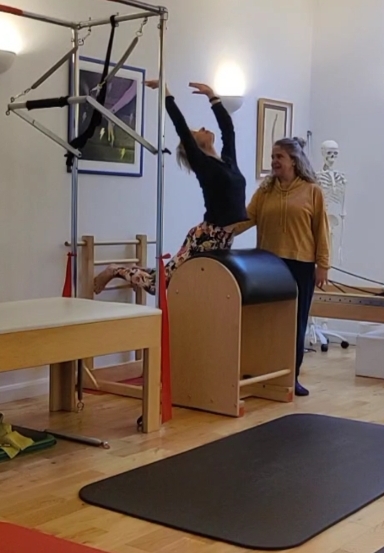
From Closed Chain to Open Chain
In Pilates, we often progress from closed-chain exercises where the moving body part receives stable feedback from a fixed surface to open-chain exercises, where we rely on our own proprioception to guide and refine the movement. As we develop greater body awareness, we need less external scaffolding.
In NVR, the same progression happens. As parents and carers become more familiar and confident with the core principles, they become less stuck and less reliant on the practitioner to guide them and more able to self-reflect, self-correct, and trust their own responses. The goal of both practices is the same: to build an awareness that becomes its own resource.
A growing awareness of how our body moves enables us to work toward balance. A growing awareness of the moments we react in unhelpful ways enables us to change how we respond, to move toward a presence that is aligned with our core beliefs and values, rather than driven by fear or habit.
A Final Reflection
I began my Pilates training from a place of curiosity and love. What I did not expect was to find, woven through the language of breath and movement and planes, a richer understanding of the work I have been doing for twenty-five years.
Both practices ask the same thing of us, in different registers. Notice. Release. Widen your base. Find your centre. Turn toward what matters, without losing yourself in the turning.
I am only at the beginning of understanding how these two worlds can speak to each other; however, I am increasingly convinced that the conversation is worth having and that it has something genuinely new to offer the people we work with.
Written by Jackie Lindeck
Highly Specialist Music Therapist
PartnershipProjects Director
NVR Association (NVRA) Accredited Practitioner, Trainer and Supervisor
Jackie is an HCPC Registered Therapist, NVR Practitioner, Trainer and Supervisor, and Director of PartnershipProjects UK; the UK’s leading provider of professional NVR training. She qualified as a comprehensive Pilates instructor at Soul Pilates in Bristol in January 2026 and is working to develop an integrated practice that brings together therapeutic and movement-based approaches. She also teaches Pilates at Pilates Living N16.
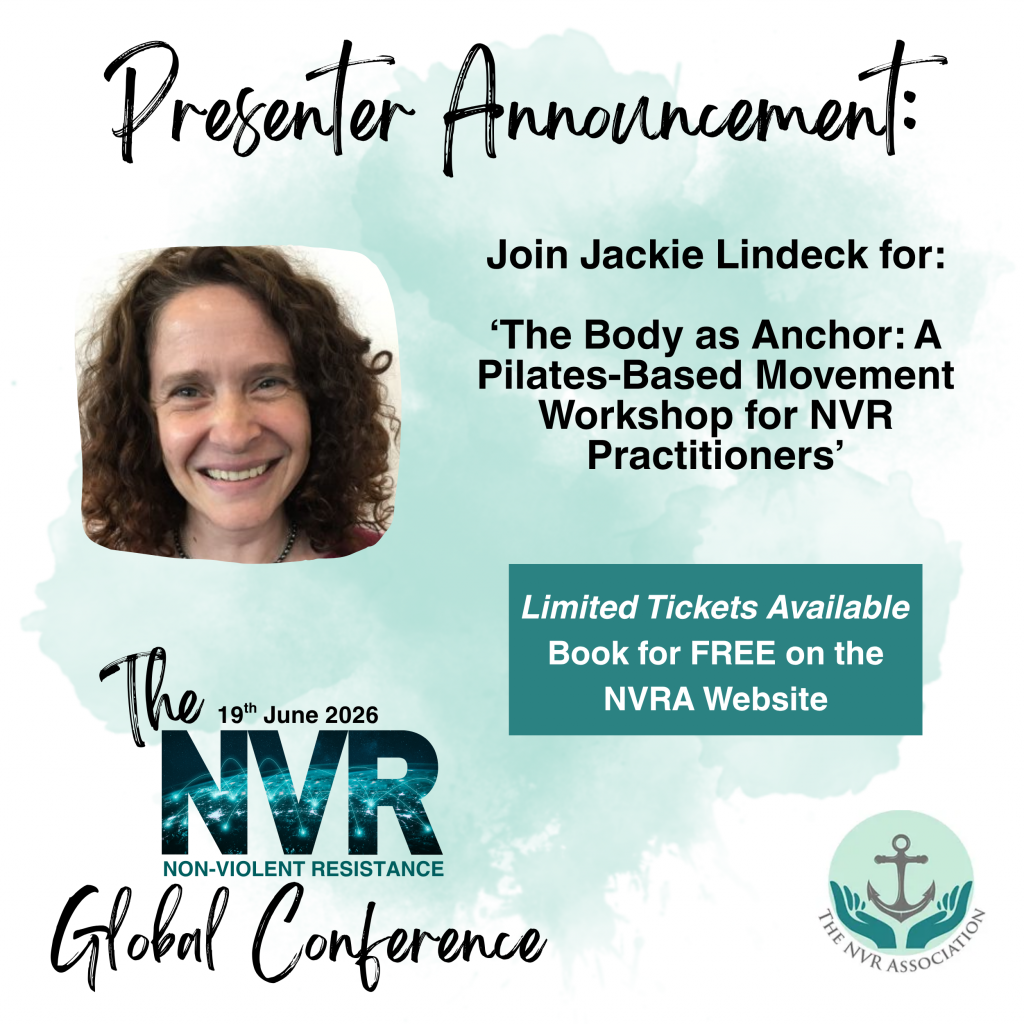
Enjoyed this? Join Jackie Lindeck at the NVR Global Conference on the 19th June 2026 – the event is FREE of charge! Book now >